Guatemala doesn’t get nearly enough credit as a wildlife destination. Most travelers think of Mayan ruins, colorful markets, and volcano hikes — and yes, all of that is real. But tucked inside the jungle canopies, along the Pacific coastline, and deep in the rainforest reserves lives a staggering variety of creatures that will genuinely stop you in your tracks. If you’re even remotely curious about nature, the Animals in Guatemala will blow your expectations clean out of the water.
I’ve spent years exploring this country — from the misty cloud forests of Alta Verapaz to the sun-soaked wetlands of Petén. Some encounters were planned. Most weren’t. A spider monkey dropping from a branch above your head at Tikal? That one you don’t forget. Guatemala rainforest biodiversity is no marketing slogan — it’s something you feel the moment you step off the beaten path.
Related Post: Ciudad Cayalá: A Must Visit in Guatemala City
Interesting Guatemalan Animals
Guatemala sits at a remarkable biological crossroads. North American species meet South American ones here, creating an overlap that wildlife photographers and eco-tourism lovers dream about. The country’s network of wildlife reserves, cloud forests, lowland jungles, and coastal wetlands gives dozens of species a place to thrive. Whether you’re a seasoned birdwatcher or someone who just wants to spot something wild on a hike, the animals native to Guatemala will not disappoint you.
What makes Guatemala especially exciting is that you don’t always have to go looking. The wildlife comes to you. Wander through Tikal National Park and you’ll hear howler monkeys before you even reach the first temple. Take a boat ride on Rio Dulce and you’ll spot caimans lounging on the banks like they own the place. This is Central American wildlife at its most raw and accessible — and it’s waiting for you.
1. Quetzal
Scientific name: Pharomachrus mocinno
The Resplendent Quetzal is Guatemala’s most iconic creature — and honestly, the hype is completely justified. This bird is extraordinary. The male’s tail feathers can stretch up to three feet long, shimmering in metallic greens and reds like something out of a fantasy novel. It’s the national bird, the face of the local currency, and a sacred symbol in ancient Mayan culture. Spotting one in the wild feels like a genuine privilege. Your best shot is visiting the Biotopo del Quetzal in Baja Verapaz, especially between March and June during breeding season when the males are most active and visible.
2. Spider Monkey
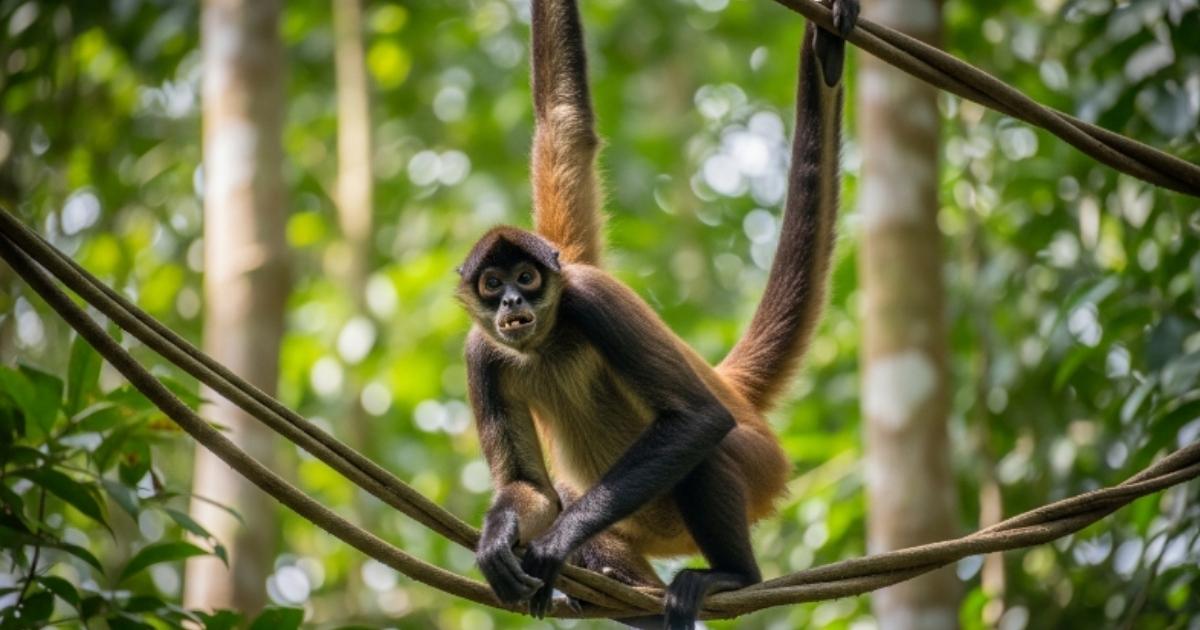
Scientific name: Ateles geoffroyi
Few wildlife moments match watching Geoffroy’s Spider Monkey swing effortlessly through the jungle canopy. These long-limbed primates use their prehensile tails like a fifth limb — gripping branches, hanging upside down, and moving with a fluid grace that seems almost choreographed. Tikal National Park is your best bet for spotting them. Walk quietly along the jungle trails early in the morning and you’ll likely hear them before you see them. Monkeys in Guatemala are a genuine highlight for families traveling with kids — the reaction on a child’s face when one swings overhead is absolutely priceless.
3. Toucan
Scientific name: Ramphastos sulfuratus
The Keel-billed Toucan is one of those birds that looks almost too vivid to be real. That enormous, rainbow-colored bill makes it unmistakable. In Guatemala, toucans are most commonly found in the lowland forests of Petén and the lush jungle around Cobán. Tikal National Park is a reliable spot — some visitors have spotted them right in the parking area without even entering the park. If you’re into exotic birds in Guatemala, adding the toucan to your checklist should be non-negotiable.
4. Montezuma Oropendola
Scientific name: Psarocolius montezuma
This bird doesn’t get nearly the attention it deserves. The Montezuma Oropendola is large, striking, and produces one of the most unusual calls in the animal kingdom — a cascading, liquid gurgle that echoes through the forest like something from another world. The males perform dramatic bowing displays while singing, which is a spectacle in itself. Look for them in the northern Petén region, particularly around Yaxha National Park. If birdwatching in Guatemala is on your itinerary, this species is a must-see.
5. Olive Ridley Sea Turtle
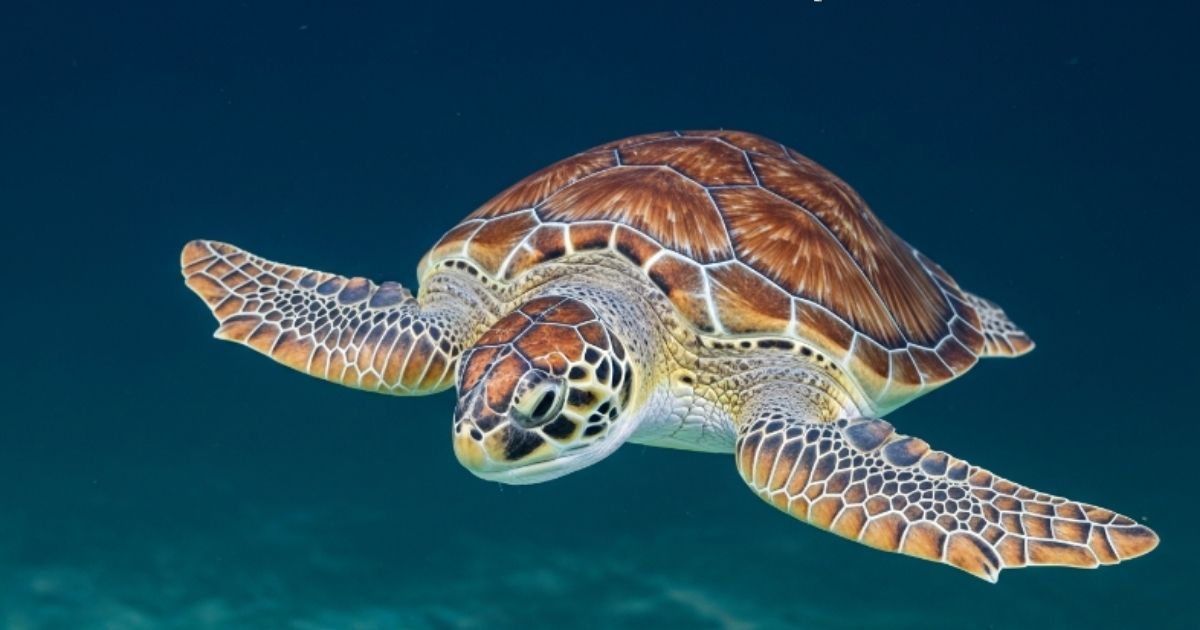
Scientific name: Lepidochelys olivacea
Sea turtles in Guatemala are a genuinely moving experience. The Olive Ridley is the most commonly spotted species along the Pacific coast, particularly around Monterrico and Sipacate-Naranjo National Park. These small, olive-green turtles haul themselves onto the beach at night to nest — a ritual that has continued for millions of years. Joining a guided night tour during nesting season gives you a front-row seat to something ancient and humbling. Many tours also offer baby turtle releases, where you place a hatchling on the sand and watch it scramble toward the ocean. Few travel experiences are more memorable than that.
6. Armadillo
Scientific name: Dasypus novemcinctus
The nine-banded armadillo is one of those creatures that looks like it wandered out of the Cretaceous period and simply never left. Armored, low-slung, and perpetually busy, these animals root through the forest floor with single-minded determination. They’re primarily nocturnal, so spotting one requires either a night hike or a healthy dose of luck. Around Semuc Champey, I once nearly tripped over one snuffling along a jungle trail at dusk. Tikal, Sierra de las Minas Biosphere Reserve, and Laguna Lachúa National Park are also reliable areas where guides report frequent sightings.
7. Vampire Bat
Scientific name: Desmodus rotundus
Yes, vampire bats are real. And yes, Guatemala has them. Before you panic — these small mammals are far less dramatic than their name suggests. They rarely target humans and are actually fascinating creatures from a biological standpoint. Their saliva contains a compound called draculin, which prevents blood from clotting — a discovery that has actual medical applications in stroke treatment research. Want to see bats in action? Head to the Lanquín Caves around sunset. Thousands of bats pour out of the cave entrance in a swirling, living cloud. It’s one of Guatemala’s most underrated wildlife spectacles.
8. Ocelot
Scientific name: Leopardus pardalis
The ocelot is a small wild cat with a coat so beautiful it was nearly hunted to extinction for the fur trade. Today, it roams the forests of Guatemala with quiet authority. Don’t let its size fool you — this is a skilled predator that hunts everything from lizards to small deer. Ocelots are nocturnal and deeply elusive, making a wild sighting genuinely rare. Your best chances are in Tikal National Park or the Sierra de las Minas Biosphere Reserve. If you do spot one frozen in the beam of a flashlight on a night walk — consider yourself extraordinarily lucky.
9. Brown Rat
Scientific name: Rattus norvegicus
Not every animal on this list is exotic — and that’s the point. Brown rats are among the most successful mammals on Earth, and Guatemala is no exception to their reach. You’ll find them wherever humans have settled. They’re included here not for glamour but for honesty. Any genuine guide to animals in Guatemala has to acknowledge the full ecological picture, including the species that thrive alongside human activity.
10. Capuchin Monkey
Scientific name: Cebus capucinus
White-faced capuchin monkeys are the social butterflies of the Guatemalan jungle. Bold, curious, and surprisingly intelligent, these primates have been observed using tools in the wild — a behavior once thought exclusive to great apes. They’re diurnal, meaning you don’t need a night tour to find them. Wander through the forested trails of Tikal during the day and you’ll likely spot a troop foraging in the canopy. They’re also notorious for eyeing tourists’ snacks, so keep your bag zipped.
11. White-Lipped Peccary
Scientific name: Tayassu pecari
If you hear a deep, grunting rumble moving through dense vegetation in the Petén jungle — that’s probably a herd of white-lipped peccaries, and you should give them space. These pig-like mammals are not to be underestimated. They travel in herds that can number in the dozens and have been documented driving off jaguars when threatened. Laguna del Tigre National Park and Sierra del Lacandón National Park both hold healthy populations. Guides in these areas know where to find them safely — and trust me, encountering a herd in the wild is something you’ll talk about for years.
12. Brown Basilisk
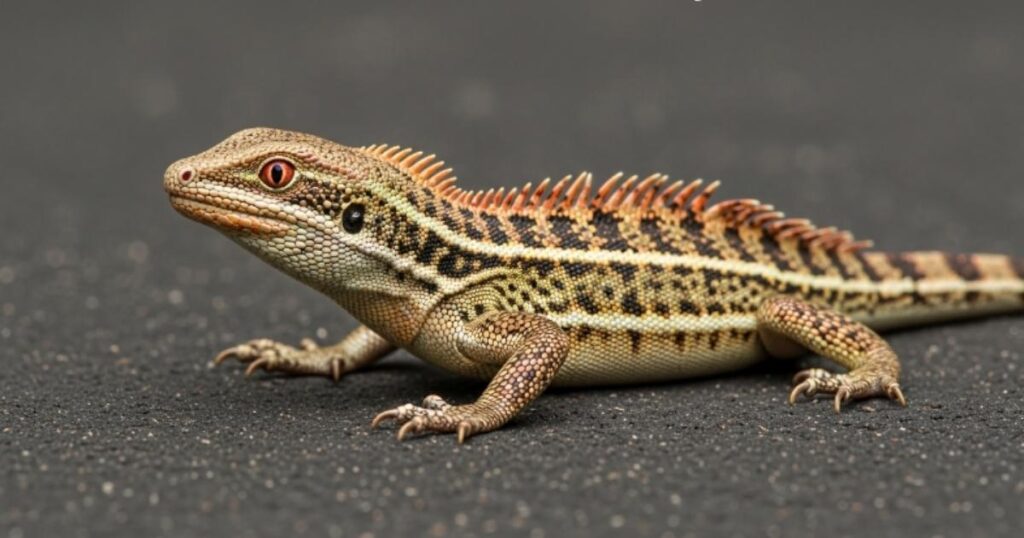
Scientific name: Basiliscus basiliscus
The Brown Basilisk earned its nickname “the Jesus Lizard” for an almost unbelievable reason — it runs on water. When spooked, this reptile sprints across the surface of ponds and streams on its hind legs, using rapid foot movements to stay afloat just long enough to escape. It’s one of the most visually astonishing things you can witness in nature, and Guatemala’s waterways give you plenty of chances. The Rio Dulce region is particularly good for spotting them. Take a slow boat tour along the riverbanks and keep your eyes low — they love basking on exposed roots and rocks near the water’s edge.
13. Spectacled Caiman
Scientific name: Caiman crocodilus
The Spectacled Caiman gets its name from a bony ridge between its eyes that resembles a pair of spectacles. Don’t let the quirky name mislead you — this is a formidable predator. Smaller than the American crocodile, caimans are nonetheless efficient hunters of fish, amphibians, and birds. In Guatemala, they inhabit the lowland wetlands and slow-moving rivers of the northern and coastal regions. Boat tours through areas like Rio Dulce and the wetlands near Retalhuleu regularly turn up caiman sightings. Spotting one half-submerged in murky water, barely visible, is a proper wildlife moment.
14. Black Hawk
Scientific name: Buteogallus anthracinus
The Black Hawk is a commanding raptor with deep charcoal plumage and a piercing yellow eye that gives it a permanently intense expression. It hunts along waterways, diving for fish, crabs, and small reptiles with impressive precision. Along Guatemala’s Caribbean coast, these birds are a regular sight perched on riverside branches or circling over mangrove estuaries. Wildlife photography in Guatemala doesn’t get much more dramatic than a Black Hawk mid-dive over dark water.
15. Black-Necked Stilt
Scientific name: Himantopus mexicanus
Elegant, improbably long-legged, and impossibly graceful — the Black-necked Stilt is a shorebird that looks like it was designed by a particularly artistic engineer. It wades through shallow coastal wetlands and estuaries along Guatemala’s southern coastline, probing for invertebrates with its slender bill. These birds are abundant and relatively easy to spot, making them a satisfying tick for birdwatchers visiting the Pacific lowlands. They’re often seen in mixed flocks with other wading birds, which makes for spectacular scenes at dusk when everything lifts off the water together.
16. Yucatan Black Howler
Scientific name: Alouatta pigra
You will hear the Yucatan Black Howler before you ever see one. Their call is one of the loudest sounds produced by any land animal — a deep, resonant roar that carries for miles through the jungle. In the early morning at Tikal, this call reverberates off the ancient stone temples in a way that feels genuinely primordial. These large, jet-black monkeys are folivores, meaning leaves make up the bulk of their diet. They move slowly and deliberately — a stark contrast to the acrobatic spider monkeys. Finding one sprawled across a high branch in the morning sun is one of the great quiet pleasures of Guatemala nature travel.
17. Jaguar
Scientific name: Panthera onca
The Jaguar is Guatemala’s apex predator and one of the most culturally significant animals in the entire country. For the ancient Maya, the jaguar embodied power, night, and the underworld. Today, it roams the deep forests of the Maya Biosphere Reserve in Petén — one of the last strongholds for this endangered species in Central America. Seeing a jaguar in the wild is rare. Genuinely rare. But the Maya Biosphere Reserve and the trails around El Mirador give you the best odds. Even if you don’t spot one, knowing you’re walking through jaguar territory adds an electric charge to every jungle hike.
18. Baird’s Tapir
Scientific name: Tapirus bairdii
Baird’s Tapir is the largest land mammal in Central America — and somehow one of the least known outside wildlife circles. It looks like a prehistoric hybrid of a pig and an anteater, complete with a short, flexible proboscis it uses to grab vegetation. This endangered species is most active at dawn and dusk, favoring flooded grasslands and riverbanks. Sierra del Lacandón National Park in northern Petén is one of the more reliable places to encounter one. Conservation efforts are ongoing, and eco-adventure travel Guatemala tours that support tapir monitoring programs are worth seeking out.
19. Guatemalan Pygmy Owl
Scientific name: Glaucidium griseiceps
Most owls are creatures of the night. The Guatemalan Pygmy Owl didn’t get that memo. This tiny, round-headed owl hunts actively during daylight hours — a behavior called diurnality that makes it far easier to observe than its nocturnal cousins. Despite being small enough to fit in your palm, it’s a bold and aggressive hunter, known to take prey larger than itself. Stay near forested eco-lodges in the cloud forest regions and listen for its sharp, repetitive whistle call. Once you know the sound, you’ll start hearing it everywhere.
20. Geoffroy’s Spider Monkey
Scientific name: Ateles geoffroyi
Geoffroy’s Spider Monkey deserves its own spotlight beyond the general spider monkey entry. This specific subspecies found in Guatemala is notable for its striking black fur, long limbs, and exceptionally expressive face. They live high in the forest canopy and rarely descend to the ground. Troops can cover enormous distances each day foraging for ripe fruit. At Tikal, they’ve grown relatively accustomed to human presence, giving you an unusually close look at their behavior. Watch for the way they use their tails as an anchor while feeding — it’s a masterclass in natural engineering.
21. American Crocodile
Scientific name: Crocodylus acutus
The American Crocodile is larger, rarer, and considerably more imposing than the Spectacled Caiman. Adults can exceed four meters in length and have a reputation for being more aggressive in the water. In Guatemala, they inhabit the coastal lagoons, river mouths, and mangrove systems along both coasts. Rio Dulce, Iztapa, and the lagoons near Flores are known hotspots. Boat tours in these areas frequently offer crocodile sightings — usually the animal lounging half-submerged near a bank, looking supremely unbothered by everything around it.
22. White-Nosed Coati
Scientific name: Nasua narica
The White-nosed Coati is what you’d get if a raccoon and a small bear had an offspring with the energy of a toddler on a sugar rush. These highly social animals travel in bands — sometimes dozens strong — foraging noisily through the forest floor and lower canopy. They’re bold, curious, and utterly unintimidated by humans, which makes them one of the easiest Guatemalan jungle wildlife species to observe up close. Tikal is full of them. Don’t feed them though — not because they’ll bite (though they might), but because human food genuinely disrupts their natural foraging behavior.
23. Hawksbill Turtle
Scientific name: Eretmochelys imbricata
The Hawksbill Turtle is critically endangered — and encountering one feels like a profound responsibility as much as a privilege. Named for its narrow, pointed beak that resembles a hawk’s bill, this sea turtle feeds primarily on sea sponges, playing a vital role in maintaining healthy coral reef ecosystems. Along Guatemala’s Caribbean coast, nesting occurs between May and November. Guided beach tours near Livingston offer the chance to witness nesting females or hatchlings. Supporting these tours directly funds local endangered species conservation programs — which is exactly the kind of eco-tourism Guatemala needs more of.
How to See Wildlife in Guatemala?
Honestly, the best wildlife encounters in Guatemala happen when you’re not specifically chasing them. That said, going in with a plan dramatically increases your chances. Hiring a local guide is non-negotiable, especially in dense jungle areas like Tikal National Park or Laguna del Tigre National Park. These guides know animal behavior, read the forest sounds, and can take you to spots that no travel blog will ever publish. Guatemala wildlife tours range from dedicated birdwatching expeditions with specialists like Cayaya Birding to multi-day eco-adventure packages through Petén that combine archaeology with wildlife spotting.
Timing matters enormously. Dawn and dusk are when most animals are active — this is true across virtually every habitat in the country. If you’re visiting the Pacific coast for sea turtles, check the nesting calendar before you book. For the Resplendent Quetzal, March through June is your window. For jaguar territory exploration, the dry season between November and April makes jungle trails more navigable. Guatemala eco-tourism infrastructure has grown considerably in recent years and reputable operators now offer wildlife photography Guatemala packages with proper equipment, ethical wildlife viewing protocols, and expert naturalist guides. Choose operators who prioritize conservation and community benefit — your tourism dollars have real impact here.
FAQs
What is the most famous animal in Guatemala?
The Resplendent Quetzal is Guatemala’s most iconic animal. It’s the national bird and holds deep cultural significance rooted in ancient Mayan tradition.
Where is the best place to see wildlife in Guatemala?
Tikal National Park in Petén is the single most productive wildlife destination in the country. You can spot monkeys, toucans, crocodiles, and dozens of bird species in a single day.
Are there dangerous animals in Guatemala?
Yes. The fer-de-lance snake, white-lipped peccaries, and American crocodiles can be dangerous if encountered carelessly. Always travel with an experienced local guide in jungle areas.
Can you see jaguars in Guatemala?
It’s possible but genuinely rare. The Maya Biosphere Reserve and the area around El Mirador offer the best chances. Most visitors don’t see one — but the possibility alone is thrilling.
When is the best time to visit Guatemala for wildlife?
The dry season, November through April, is ideal for jungle trekking and wildlife spotting. For sea turtle nesting, visit the Pacific coast between July and November.
Conclusion
Guatemala is one of those rare places where the wildlife genuinely rivals the archaeology and the culture. The animals in Guatemala span an extraordinary range — from the iridescent Quetzal drifting through cloud forest mist to the ancient rumble of a howler monkey echoing off Mayan stone. Every habitat holds something remarkable. Every trail has a story waiting to happen.
You don’t need to be a hardcore naturalist to have unforgettable wildlife encounters here. You just need curiosity, a good guide, and a willingness to slow down and pay attention. Guatemala rewards that kind of traveler enormously. Go explore it.